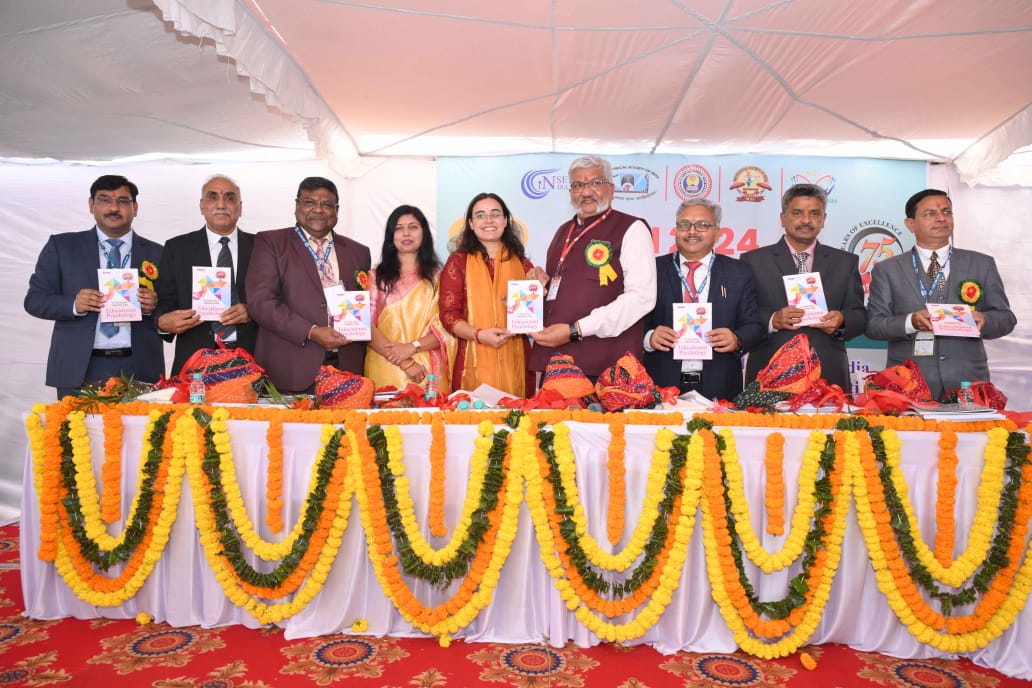
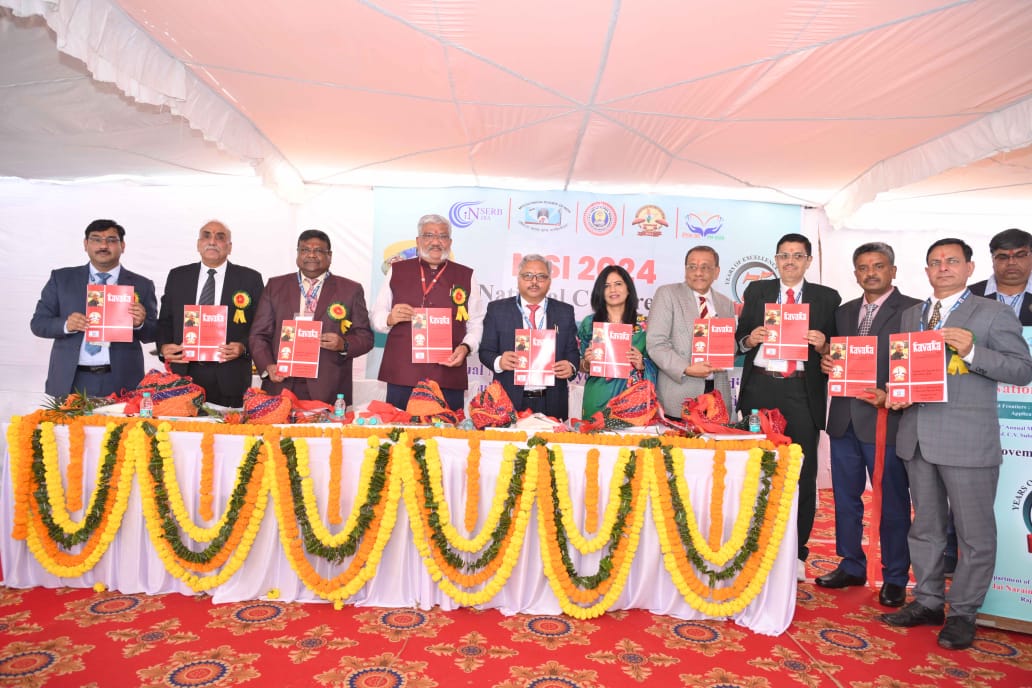

From the Editor's Desk
It gives me immense pleasure to present to the readers the first issue of the 62nd volume of KAVAKA. This issue boasts of a remarkable breadth of contemporary mycological research in India, spanning biodiversity exploration, taxonomy and molecular systematics, nutraceutical studies, biotechnology, and sustainable innovation.
The issue unfolds with a comprehensive review on the diversity and nutraceutical potential of wild edible mushrooms (sixty lamellate macrofungi) from Amravati district, Maharashtra, highlighting the ecological richness of the region and the immense food and medicinal value of native macrofungi. In line with the inquiry of edible mushrooms in human welfare, the issue also features a nutritional, nutraceutical, and phytochemical investigation of Russula delica collected from Chhattisgarh, validating its traditional use and highlighting its potential as a functional food. Such studies are instrumental in demonstrating the promising potential of edible mushrooms as a functional food of the future.
The role of fungi in sustainable technologies is suggested by the use of fungal mycelium grown on agricultural residues for fabrication of the biodegradable materials. Such studies highlight the potential of fungi in addressing environmental challenges through green materials and circular bioeconomy approaches.
Fungal taxonomy and systematics remain central to mycology, and this issue features several valuable additions of such nature. A newly described foliicolous species, Acremoniula rutacearum, from Chhattisgarh enriches our understanding of microfungal diversity. A novel polypore, Picipes anjaliae sp. nov., from the Western Ghats further emphasizes India's unexplored fungal wealth. Complementing these discoveries are reports on Truncospora ochroleuca from North East India, new additions to the lichenicolous mycota of India from the Himalayas, and morphological investigations of three species of Conocybe from Maharashtra.
The issue also reflects the emerging line of scientific inquiry that aims at integrating classical taxonomy with applied science. A study on Ganoderma gibbosum, sampled from Kerela, combines micro/macroscopic and phylogenetic characterisation with the antibacterial potential of silver nanoparticles biosynthesized using the fungus. Likewise, metabolomic insights into an endophytic Aspergillus flavus reveal promising antifungal activity against important plant pathogens like Fusarium oxysporum and Rhizoctonia solani. Furthermore, the characterization of Collybiopsis gibbosa explores its nutritional, antioxidant, and antibacterial potential, demonstrating the untapped bioactive promise of wild fungi. Finally, cultivation-oriented research is represented through the evaluation of morphological and cultural characteristics of Pleurotus eryngii, a commercially important mushroom. The results of the study have an implication on strain selection for large scale cultivation of the king oyster mushroom with relevance to food production and biotechnology. Together, the aforementioned contributions present a vivid picture of the bandwidth of fungal
science in India, ranging from taxonomy to biotechnology and from ecosystem diversity to application in human health. It showcases fungi as not merely the organisms of academic interest, but as indispensable allies in food security, ecosystem functioning, medicine, agriculture, and sustainable industry. I sincerely hope our readers find this issue informative, stimulating, and inspiring for future mycological endeavours.
On that note, I sincerely thank all the contributors, the authors, reviewers, and editorial team members for their dedication, scholarly contributions, and cooperation in putting together this issue in its physical form. We further invite scientists, academics, and research scholars to share their work through this journal, helping us to share the varied facets of mycology.
Best wishes!
31st March 2026
Prof. Rupam Kapoor
Editor-in-Chief (KAVAKA)
Senior Professor
Department of Botany
University of Delhi
Delhi- 110 007
| Title | Contents | Editorial Board | |
 |
|
|
|
KAVAKA 62(1): 2026 DOI: 10.36460/Kavaka/62/1/2026/1-6
Morphological and Molecular Investigation of New Polypores Fungi Picipes anjaliae sp. nov. (Basidiomycota: Polyporales: Polyporaceae) from India
Patil Yogesh S* and Jadhav Sunita N
Department of Botany, Rajaram College, Kolhapur, Maharashtra 416 004, India.
*Corresponding author Email: This email address is being protected from spambots. You need JavaScript enabled to view it.
(Submitted on; June 2, 2025; Accepted on March 20, 2026)
ABSTRACT
In this manuscript, Picipes anjaliae sp.nov. is described and illustrated from western ghat of Kolhapur district of Maharashtra state, India. This new species is characterized by distinctly long central stipe with brownish black cuticle; annual, yellowish brown to reddish-brown deeply infundibuliform pileus (5-35 mm diam.) and irregular to angular pores (3-6 per mm). The poroposed species ismorphologically and phylogenetically quite close to Polyporus tubaeformis (P. Karst.) Ryvarden & Gilb. and Picipes auriculatus B.K. Cui, Xing Ji & J.L. Zhou from which is differs in having a long centrally attached stipe (up to 26 cm long and 2 mm diam.), small pileus (<3cm diam.) and longer spores measuring6.2–9.5 µm. Molecular phylogenetic conclusion also support the noval status of P. anjaliae sp. nov.
Keywords: Picipes, Taxonomy, Phylogeny, Polyporaceae, White rot, India.
KAVAKA 62(1): (2026) DOI: 10.36460/Kavaka/62/1/2026/7-11
Truncospora ochroleuca (Polyporales) from North East India based on Scanning Electron Microscopy and Molecular Data Analysis
Zoliansanga1* and R. Lalfakzuala2
1Department of Microbiology, Shillong College, Shillong, Meghalaya
2Department of Botany, Mizoram University, Aizawl, Mizoram
*Corresponding author Email: This email address is being protected from spambots. You need JavaScript enabled to view it.
(Submitted on June 7, 2025; Accepted on April 9, 2026)
ABSTRACT
This study reports the ultrastructural study of basidiocarp and molecular base identification of a poroid wood-inhabiting fungus, Truncospora ochroleuca from Meghalaya, North East India. Scanning Electron Micrographs of LS and VS of the fruiting body provided a much clear three-dimensional image and stereoscopic view of the internal structures of the fruiting body. The fungal tissue was considered for extraction of genomic nuclear DNA and was amplified by two primers, ITS1F and ITS4R. Based on nucleotide homology and phylogenetic analysis, the studied fungus is identified as T. ochroleuca. This research work is the first to report T. ochroleuca from Meghalaya, India.
Keywords: Context layer, ITS, Molecular Barcode, SEM, Truncated spores, Tube layer.
KAVAKA 62(1): (2026) DOI:10.36460/Kavaka/62/1/2026/12-22
Taxonomic and Phylogenetic Analysis of Ganoderma gibbosum from Kerala and Antibacterial Activity of Its Silver Nanoparticles
Sukanya S Chandranb, c, Chiseena, C.T.b, c, Gayathri Raj, S.R.b, c, Swapna Johnb, c, Sheeba, M.S.a, b, Shyam Kumar, S.b, Gayatri, G.P.b, Anil Kumar, A.K.a, b and Manoj Kumar, A.a, b*
aCentre for Applied Mycology & Lichenology, Government College for Women, Thiruvananthapuram, Kerala, India, PIN 695 014
bPostgraduate and Research Department of Botany, Government College for Women, Thiruvananthapuram, Kerala, India, PIN 695 014
cResearch Centre, University of Kerala, Thiruvananthapuram, Kerala, India, PIN 695 034
*Corresponding author Email: This email address is being protected from spambots. You need JavaScript enabled to view it.
(Submitted on June 9, 2025; Accepted on March 4, 2026)
ABSTRACT
Ganoderma gibbosum was collected from Thiruvananthapuram District, Kerala State, India and was characterized based on macroscopic, microscopic and phylogenetic data. The methanolic and distilled water extracts of G. gibbosum was used to synthesize silver nanoparticles and its antibacterial effect was studied against Bacillus cereus, Bacillus subtilis, Escherichia coli, and Proteus mirabilis. The maximum UV absorption observed at 420.25 nm corresponds to the specific surface plasmon resonance band of biosynthesized silver nanoparticles. Proteus mirabilis exhibited the highest susceptibility to the extract, as indicated by a substantial zone of inhibition measuring 20 mm. These silver nanoparticles demonstrated efficacy against pathogens by inhibiting their proliferation, thereby potentially mitigating environmental and public health risks.
Keywords: AgNPs, Antimicrobial, nrITS, Polyporales, Taxonomy, White rot.
KAVAKA 62(1): 2026 DOI:10.36460/Kavaka/62/1/2026/23-25
Diversity and Nutraceutical Potential of Wild Edible Mushrooms in Amravati District, Maharashtra: A Comprehensive Review
Deshmukh A.M 1, Hande D.V 2*
1Department of Botany, Shri Shivaji Science College, Amravati (MS), India.
2Mahatma Fule Arts, Commerce and Sitaramji Chaudhari Science Mahavidyalaya Warud, Amravati (MS), India.
*Corresponding author Email: This email address is being protected from spambots. You need JavaScript enabled to view it.
(Submitted on June 18, 2025; Accepted on March 18, 2026)
ABSTRACT
Wild Macromycetes are among the many mineral treasures that India has to offer. There are 27,000 fungal species in India overall. Because of its delicious flavor and texture, humans have been eating them since prehistoric times. Extensive research conducted on the variety of mushrooms found in Maharashtra in the Vidarbha region, whereas some mycologists focused on the western region. The mushrooms are fungal fruiting bodies, namely belonging to the Ascomycetes and Basidiomycetes. In recent decades, several researchers have released reports on edible mushrooms. Amravati is one of the major district of Maharashtra, has a rich history. There are hills, valleys, and thick green forests throughout the entire district. Chikhaldara and Dharni talukas are located in the Satrupa range's deep forest, which is home to several teak and bamboo plantations, Located beneath the hilly terrain. A tropical wet and dry climate prevails across the district. Here, temperatures can fluctuate greatly throughout the year, with scorching summers and very freezing winters. Approximately sixty lamellate macrofungi were collected and identified from various locations across the Amravati district.
Keywords: Macromycetes, Maharashtra, Vidarbha, Ascomycetes, Basidiomycetes, Chikhaldara, Dharni, Satpura, Amravati
KAVAKA 62(1): 2026 DOI: 10.36460/Kavaka/62/1/2026/36-38
Acremoniula rutacearum - A New Foliicolous Fungal Species Infecting Aegle marmelos (L.) Correa from Ambikapur, Chhattisgarh, India
Anshu Deep Khalkho1,3*, Himani Sandey2, Rambharos Jangdey2, Poornima Pathare2, Manna De2, Supriya Kotrangi1, A.N. Rai3
1Bharti Vishwavidyalaya, Department of Botany, Durg, C.G.
2Dr. C. V. Raman University, Department of Life Sciences, Kota, Bilaspur, C.G.
3Dr. Hari Singh Gour Vishawavidyalaya, Department of Botany, Sagar, M.P.
*Corresponding author Email: This email address is being protected from spambots. You need JavaScript enabled to view it.
(Submitted on June 27, 2025; Accepted on February 26, 2026)
ABSTRACT
A field survey was conducted from shaded areas of Ambikapur, Chhattisgarh in India. Micro foliicolous fungi was found from Sanjay Park in the month of January 2019. The flora of Ambikapur, C.G., India is dense and is suitable for the emergence of fungi. The forest survey of Ambikapur (C.G.) has resulted in the collection of undescribed novel fungus, affecting living leaves of Aegle marmelos (L.) Correa. Based on morphological characters, microscopic images, SEM based analysis and comparison with other parallel taxa, a novel species of Acremoniula namely Acremoniula rutacearum has been described. Literature survey reveals Acremoniula is fewer recorded genus and no species of Acremoniula is reported on the host family as well as on plant Aegle marmelos. Only 9 species are published from the genus Acremoniula all over world. Acremoniula sarcinellae (Pat. & Har.) Arnaud ex Deighton, 1969 and Acremoniula monospermae show some similarities with the proposed species alongside show differences. The critical investigation exposes that the present collection is utterly distinct in symptoms, dimension of micronematous conidiophores, truncate base and conidia.
Key words: Acremoniula, Aegle marmelos, Ambikapur, Foliicolous fungi, Flora and novel fungi
KAVAKA 62(1): (2026) DOI: 10.36460/Kavaka/62/1/2026/39-43
Morphological Investigations of Three Species of the Genus Conocybe from Maharashtra
Shubham S. Sakhare* and Dilip V. Hande
Mahatma Fule Arts, Commerce and Sitaramji Chaudhari Science College Warud-444906, Amravati, Maharashtra, India
*Corresponding author Email: This email address is being protected from spambots. You need JavaScript enabled to view it.
(Submitted on June 27, 2025; Accepted on March 18, 2026)
ABSTRACT
In the present investigations the authors explored the morpho-taxonomic characteristics of three species of Conocybe i.e. Conocybe albipes, C. apala and C. rickenii, collected from animal dung from Amravati region of Maharashtra (India). The study that describes and differentiates these three species based on morphological features such as cap shape, colour, gill arrangement, and spore morphology. The taxonomic descriptions are accompanied by illustrations depicting their morphological and anatomical characteristics.
Keywords: Conocybe, Fungal-taxonomy, Coprophilous
KAVAKA 62(1): 2026 DOI: 10.36460/Kavaka/62/1/202/44-64
Development of Biodegradable and Sustainable Materials using Fungal Mycelium Grown on Agricultural Residues
Pushpa H1*, Shashidhar K2, Maithri D.B1, Sumalatha L1, Shruthi A. S1, Sriharsha D. V2, Vishal H1, Sathish3, Savitha J1
1Department of Microbiology, MS Ramaiah College of Arts, Science and Commerce-Autonomous, MSRIT Post, Mathikere, Bangalore - 560054, India.
2Department of Microbiology, Bangalore University, Jnanabharathi Campus, Bangalore - 560056, India.
3Science Farmers, #3&4, 15th Cross, Malgala Main Road, Nagarbhavi 2nd Stage, Bangalore - 560091, India.
Corresponding author Email: This email address is being protected from spambots. You need JavaScript enabled to view it.
(Submitted on June 31, 2025; Accepted on February 25, 2026)
ABSTRACT
The growing environmental burden caused by synthetic and petroleum-based materials necessitates the development of sustainable alternatives. This study investigates the fabrication of biodegradable and durable composite materials using fungal mycelium grown on agricultural residues. Thirteen genera of Basidiomycota fungi producing fruiting bodies were evaluated across sixty-four agricultural substrates. Following a two-stage screening process, selected fungal strains demonstrated optimal mycelial colonization and binding capacity. Substrate compositions and growth conditions were optimized to enhance structural integrity. The resulting mycomaterials were assessed for density and compressive strength. Results indicated that combinations such as corn stalk and sawdust supported vigorous fungal growth and yielded the highest-density composites (257 kg/m³). Ganoderma-based materials also showed promising compressive strength (0.32 MPa). These findings suggest the feasibility of replacing synthetic packaging materials and particle boards with environmentally friendly fungal composites.
Keywords: Mushroom, Mycelium, Agricultural residues, Mycomaterial, Biodegradation
KAVAKA 62(1): (2026) DOI: 10.36460/Kavaka/62/1/2026/55-69
Metabolomic Insights into the Endophytic Aspergillus flavus through GC-MS/MS and its Antifungal Activity against Fusarium oxysporum and Rhizoctonia solani
Tanya Joshi1, Avneet Pal Singh1*, Rajnish Kumar Verma2
1Department of Botany, Punjabi University, Patiala - 147 002, Punjab, India.
2 Department of Plant Pathology, Punjab Agricultural University, Ludhiana - 141 001, Punjab, India.
*Corresponding author Email: This email address is being protected from spambots. You need JavaScript enabled to view it.; This email address is being protected from spambots. You need JavaScript enabled to view it.
(Submitted on August 7, 2025; Accepted on February 3, 2026)
ABSTRACT
Isolated from the medicinal plant Dalbergia sissoo, the endophytic fungus Aspergillus flavus was subjected to their in-depth investigation integrating both the antifungal and chemical analysis. The antifungal activity was validated through a series of methodologies, including dual culture assays, poisoned food techniques, and the disc diffusion assays. Advanced metabolite profiling using Gas Chromatography-Tandem Mass Spectrometry (GC-MS/MS) was also carried out. The mycoendophyte exhibited potent antifungal activity against the pathogens Rhizoctonia solani and Fusarium oxysporum. GC-MS/MS led to the identification of seventeen key metabolites, with 9-Hexadecanoic acid, 9-hexadecenyl ester, and lidocaine standing out for their significant abundance, suggesting their critical contribution to the bioactivity observed. This comprehensive study accentuates the immense biotechnological potential of A. flavus as a reservoir of pharmacologically active compounds with promising antifungal applications, thus offering a promising alternative to minimize reliance on chemical fungicides for the pathogen control.
Keywords: Antifungal compounds, 9-Hexadecanoic acid, Chromatography, Mycoendophytes, Pathogens
KAVAKA 62(1): (2026) DOI: 10.36460/Kavaka/62/1/2026/70-75
Morphological, Molecular, Nutritional and GC-MS based characterization of Collybiopsis gibbosa with Antioxidant and Antibacterial activities
Gourab Kumar Barman1, Ishita Ray1, Jyotsna Das2, Dipanwita Saha3 and *Aniruddha Saha1
1 Molecular Plant Pathology and Fungal Biotechnology Laboratory, Department of Botany, University of North Bengal, West Bengal, India-734013
2 Department of Botany, Alipurduar University, West Bengal, India-736122
3 Plant Biotechnology Laboratory, Department of Biotechnology, University of North Bengal, West Bengal, India-734013
*Corresponding author: This email address is being protected from spambots. You need JavaScript enabled to view it.
(Submitted on August 18, 2025; Accepted on March 23, 2026)
ABSTRACT
Collybiopsis gibbosa is a little-known wild mushroom, with no comprehensive study reported so far from India. In the present investigation, specimens were collected from bamboo substrates and identified based on morphology and ITS-rDNA sequencing, which clustered the isolate within the Collybiopsis clade. The fruiting bodies contained appreciable amounts of carbohydrates and proteins, along with significant levels of phenolics and flavonoids. The methanolic extract exhibited strong antioxidant potential, demonstrating concentration-dependent DPPH radical scavenging activity. Antibacterial activity was observed against Staphylococcus aureus, Bacillus subtilis, and Salmonella typhimurium, with inhibition zones ranging from 11.1-14.2 mm.
Mineral profiling demonstrated high potassium (3383 mg/100 gm), magnesium (201 mg/100 gm), calcium (72 mg/100gm), iron (46.8 mg/100gm), and zinc (49 mg/100gm), along with trace levels of other essential elements. GC-MS analysis identified 30 compounds, dominated by fatty acids and their derivatives, including cis-13-Octadecenoic acid (55.28% peak area), n-Hexadecanoic acid (17.34%), and Octadecanoic acid (3.98%), as well as sterols such as ergosterol (2.66%). Many of these metabolites are known for antimicrobial, antioxidant, and pharmacological properties. This study provides the first detailed report on the morphology, molecular identity, nutritional composition, bioactivity, and chemical profiling of C. gibbosa from India
Keywords: Collybiopsis gibbosa, ITS sequencing, antioxidant, antibacterial, minerals, GC-MS
KAVAKA 62(1): 2026 DOI: 10.36460/Kavaka/62/1/2026/76-84
Unmasking the Functional Food Potential of Russula delica: A Nutritional and Phytochemical Approach
Neelam Shukla¹, Chandrahas Dewangan¹, Mamta Patra Shahi², Sushil Kumar Shahi¹*
1Bioresource Product Research Laboratory, Botany Department, Guru Ghasidas Vishwavidyalaya, Bilaspur.
2Department of Microbiology, Anjaneya University, Raipur.
*Corresponding author Email: This email address is being protected from spambots. You need JavaScript enabled to view it.
(Submitted on August 21, 2025; Accepted on February 3, 2026)
ABSTRACT
The present study investigates the nutritional composition, nutraceutical potential, and phytochemical constituents of the wild edible mushroom Russula delica Fr., collected from forest regions of Chhattisgarh, India. Although commonly consumed by indigenous communities, this species remains underexplored with respect to its scientific and nutritional significance. Proximate analysis of the dried fruiting bodies revealed a high carbohydrate content (66.21%) along with substantial protein levels (26.61%), indicating its value as an energy-rich and protein-dense food source. In addition, the mushroom contained appreciable amounts of dietary fiber (10.57%), ash (8.21%), and crude fat (3.62%), contributing to its overall nutritional profile. Nutraceutical evaluation revealed a total phenolic content of 10.16 mg/g and a flavonoid content of 1.37 mg/g, both of which are associated with strong antioxidant properties. Furthermore, trace amounts of carotenoids, including β-carotene (0.08 µg/g) and lycopene (0.11 µg/g), were detected. Gas chromatography–mass spectrometry (GC–MS) analysis of the methanolic extract revealed the presence of fatty acids, terpenoids, steroids, and hydrocarbons. These bioactive compounds are known to exhibit diverse pharmacological activities, such as antimicrobial, anti-inflammatory, and antioxidant effects. Overall, the study demonstrates the significant nutritional and medicinal value of R. delica, validating its traditional use and highlighting its potential as a functional food. The findings also emphasize its promise as a sustainable, nutrient-rich resource for future therapeutic and nutraceutical research.
Keywords: Russula delica, Wild edible mushrooms, Nutritional composition, Phytochemical analysis, Functional food
KAVAKA 62(1): (2026) DOI: 10.36460/Kavaka/62/1/2026/85-92
Evaluation of Morphological Characteristics of Pleurotus eryngii
Hemshikha Sahu*, Rupinder Diwan and Devnarayan Patel
Department of Botany, Government Nagarjuna Post Graduate College of Science Raipur, Chhattisgarh - 492 010, India.
*Corresponding author Email: This email address is being protected from spambots. You need JavaScript enabled to view it.
(Submitted on March 1, 2026; Accepted on March 19, 2026)
ABSTRACT
Pleurotus eryngii, exhibits distinct morphological characteristics and commonly known as the king oyster mushroom. Morphological features of P. eryngii reveal its significance in commercial and ecological field. This research investigates the macroscopic morphology of P. eryngii under controlled environmental conditions. Key features of P. eryngii such as cap diameter, color, shape, stipe length, thickness, color, gill attachment, and its different developmental stages were evaluated thoroughly. Cultural characteristics were also evaluated by observing colony morphology, mycelial density, growth pattern, and mycelium color on malt extract agar medium. The results are useful in species identification, classification, strain selection for large scale cultivation and potential biotechnological applications of P. eryngii.
Keywords: Pleurotus eryngii, Morphology, Pileus, Stipe, Gills, Mycelium.
KAVAKA 62(1): (2026) DOI: 10.36460/Kavaka/62/1/2026/93-102
New Additions to the Lichenicolous Mycota of India
Sunita Bisht 1,2, Yogesh Joshi 1* & Nirmala Pargaien2
1Department of Botany, University of Rajasthan, Jaipur - 302004, Rajasthan, India
2Department of Botany, M.B. Govt. Post Graduate College, Haldwani - 263139, Nainital, Uttarakhand, India
*Corresponding author email: This email address is being protected from spambots. You need JavaScript enabled to view it.
(Submitted on January 20, 2026; Accepted on April 2, 2026)
ABSTRACT
The present study reports seven lichenicolous fungi and one lichenicolous lichen as new records for India from high-altitude regions of Uttarakhand. The newly documented lichenicolous fungi include Arthonia xanthoparmeliarum Etayo (on Xanthoparmelia sp.), Didymocyrtis slaptonensis (D. Hawksw.) Hafellner & Ertz (on Xanthoria sp.), Endococcus exerrans Nyl. (on Rhizocarpon disporum (Nägeli ex Hepp) Müll. Arg., Endococcus verrucisporus Alstrup (on Protoparmeliopsis muralis (Schreb.) M. Choisy), Intralichen baccisporus D. Hawksw. & M.S. Cole (on Calogaya sp.), Muellerella rhizocarpicola Brackel (on Rhizocarpon geographicum (L.) DC.) and Stigmidium congestum (Körb.) Triebel (on Lecanora sp.). The new lichenicolous lichen is Erichansenia epithallina (Lynge) S.Y. Kondr., Kärnefelt & A. Thell (on Rhizoplaca sp.). These findings expand India's lichenicolous mycota checklist to 288 species. An artificial key to all known Indian lichenicolous lichens is provided. The findings emphasize the understudied diversity of lichen-associated fungi in the Himalayas and the need for more surveys in remote Indian regions.
Keywords: Himalaya, Lichenicolous lichen, New records, Teloschistaceae